
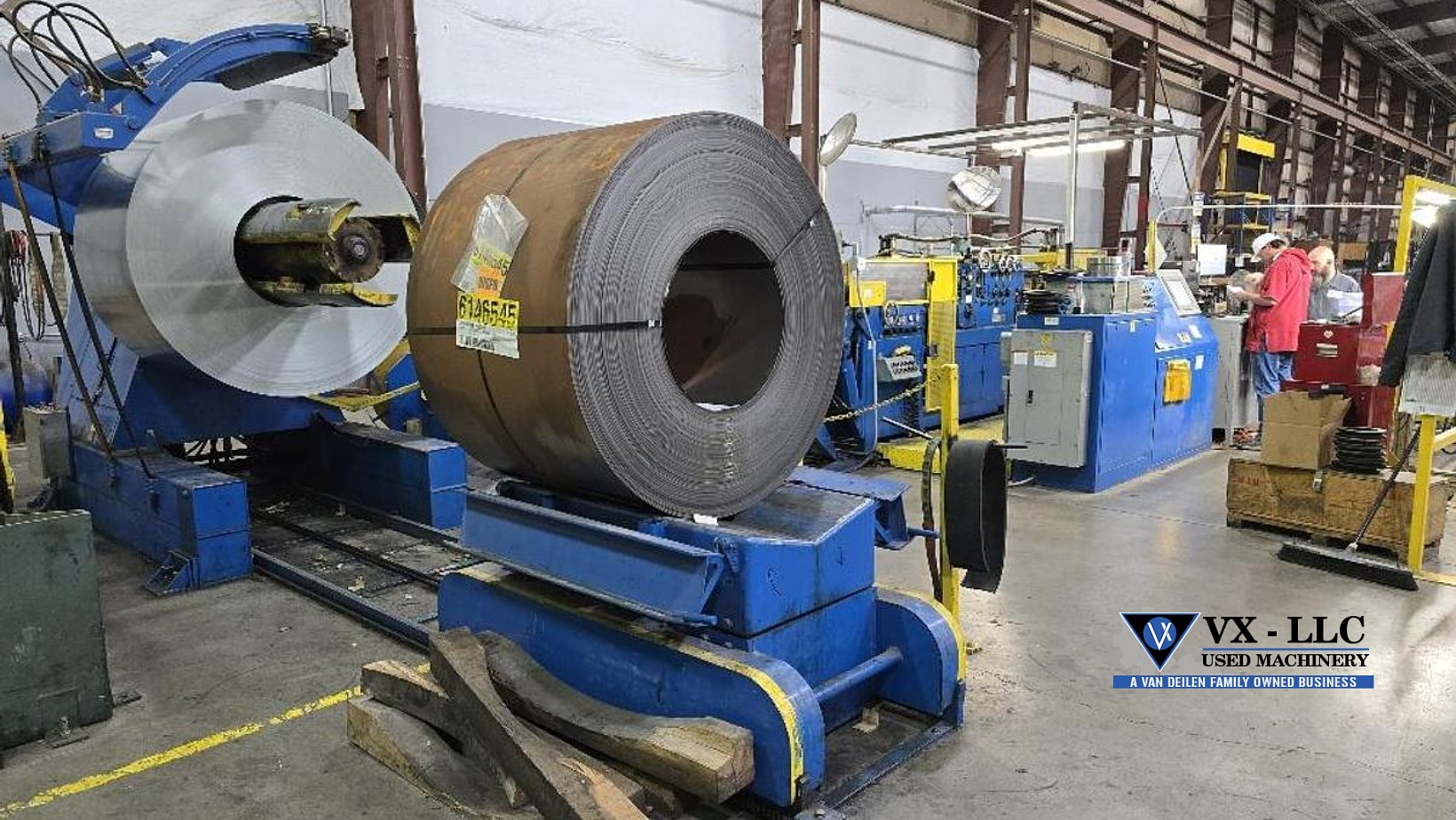
Should You Upgrade, Retrofit, or Replace Your Cut-to-Length Line?
Manufacturing professionals rely on their cut to length lines (CTL lines) to deliver precise, high-volume sheet metal for downstream fabrication. Aging cut to length lines can slow your production, increase maintenance costs, and limit your ability to meet customer demand. Whether you're processing hot-rolled steel for the construction industry, high-strength coil for automotive components, or aluminum for HVAC systems, your cut to length line is important in meeting production schedules and quality standards.
But like any industrial equipment, cut to length lines age and eventually, performance starts to decline. When that happens, facility managers and plant engineers face a crucial decision: do you upgrade, retrofit, or replace your current cut to length line?
Making the wrong choice can lead to excessive downtime, wasted investment, or missed production targets. Making the right one can extend the life of your line, unlock higher throughput, and increase profitability.
When to Evaluate Your Cut to Length Line
For many plants, cut to length lines are legacy systems. They may have been installed 10, 20, or even 30 years ago. That kind of longevity speaks to their durability, but no machine lasts forever without attention. Even when the mechanical structure remains sound, electrical components and control hardware often become obsolete or unsupported long before the frame, rolls, or drives wear out.
If your cut to length line is producing inconsistent sheet lengths, stalling, or requiring constant adjustment, that’s a clear sign it’s time for a system review. Lines that frequently break down, require obsolete parts, or fail to meet modern safety and speed expectations often cost more in the long run than a well-planned upgrade or replacement.
Common symptoms that signal the need for action:
· Inconsistent feed or stacking
· Reduced throughput
· Difficulty handling new gauges or coil widths
· Operator safety concerns
· Frequent downtime or expensive repairs
Worse still, these issues often compound during peak demand seasons. A service center handling just-in-time deliveries to a construction site or auto plant can't afford a line that’s unpredictable.
At this point, the real question isn't if you should act, but how.
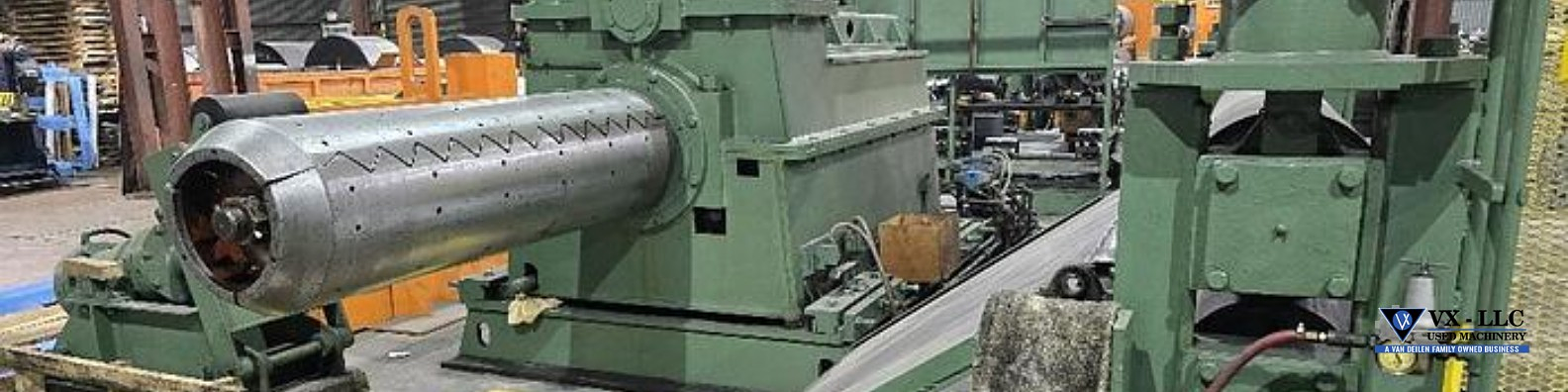
Upgrade Controls When the Mechanics Are Solid
In many cases, the core components of your cut to length line - such as the leveler, shear, or uncoiler - may still be in good shape. But if your controls system is outdated, upgrading to a modern PLC-based control solution can significantly improve reliability, troubleshooting, and automation capability at a lower cost and with less disruption than full replacement.
Benefits of a control upgrade:
- Improved automation and line synchronization
- Faster, more accurate shearing
- Better diagnostic and safety integration
- Minimal downtime compared to full replacement
A modern control system upgrade can deliver tighter length accuracy, better repeatability, and new safety interlocks. It also enables you to integrate automation features that weren’t possible when the line was originally installed. Common upgrades include encoder-based length measurement, updated motion and drive integration, and modern safety PLC or safety relay architectures depending on the line.
Retrofit Select Cut to Length Line Components
If your issues go beyond controls, a targeted retrofit may be the right fit. Retrofitting is a targeted way to extend the life of your existing CTL line without replacing it completely. Retrofitting involves replacing or rebuilding one or more core components, such as swapping in a new precision leveler, upgrading the shear, reworking the stacker, or enhancing the material handling system. This approach gives you the performance boost you need without the cost or downtime of a complete line replacement.
If your line’s structure is sound but a few components are limiting performance, this might be your best move.
Popular retrofit options:
- Replace or upgrade the shear
- Add a more advanced leveler
- Improve material handling systems (stackers, roll feeds)
- Integrate better drive and control components
This strategy helps keep your facility running while boosting throughput, especially for companies with space constraints or tight budgets.
The key to a successful retrofit is integration. New components must be engineered to work with existing drives, sensors, safety circuits, and control logic, or downtime and inconsistent performance can become ongoing issues. That’s where expert planning and support, like what we offer at VX Machinery, make all the difference.
Replace the CTL Line If It Can’t Meet Your Production Goals
There comes a point when a cut to length line is simply past its prime. It may be too slow, too unreliable, or unable to handle the widths, thicknesses, or material types your customers now demand. At that point, investing in a brand-new or pre-owned line becomes the strategic choice.
If your production demands have changed dramatically — or if your current cut to length line simply can’t keep up — a full replacement may be the best long-term investment. Newer and fully rebuilt cut to length lines offer better speeds, tighter tolerances, and support for modern material types.
And here’s something many facility managers overlook: replacement doesn’t have to mean “brand new from the OEM.” At VX Machinery, we source and refurbish high-quality pre-owned cut to length lines that deliver like-new performance at a fraction of the cost and lead time. Some are ready for shipment and can be installed within weeks, not months.
That’s a huge advantage in today’s market, where custom-built equipment lead times can vary widely depending on scope and specifications, often ranging from several months to 12+ months, and in some cases longer.
What to Consider When Choosing the Best Path
Here are key questions to guide your decision on whether to upgrade, retrofit, or replace your cut to length line.
- What’s the current cost of doing nothing? - Are you losing production hours? Facing customer complaints? Spending more on maintenance than you should?
- Can your line handle the gauges, speeds, or widths required today? – Performance mismatches can hurt quality, safety and throughput – costing you customers and production time.
- What’s your downtime tolerance? Some fixes can be made in a day or two. Others require weeks or months of planning. Understanding your production windows helps guide what’s feasible.
- What’s your budget, and what’s the ROI? - A smart investment pays for itself. That might mean a $75,000 controls upgrade that eliminates $ 10,000 per month in lost output, or a $ 250,000 replacement that unlocks a new product line.
Why Work with VX Machinery
At VX Machinery, we don’t believe in one-size-fits-all solutions. We specialize in used and rebuilt cut to length lines and other coil processing equipment. We help you evaluate your current line honestly, review performance data, and match you with the right upgrade, retrofit, or replacement option.
We offer:
- Full assessments of your cut to length line’s mechanical and electrical condition
- Refurbished and pre-owned machinery with verified specs and real-world reliability
- Guidance on budgeting, lead times, and plant integration
- Connections to experienced installers and control system integrators
We’re not here to sell you the biggest, most expensive machine. We’re here to help you make the decision that’s right for your business.
If your cut-to-length line is slowing you down—or you're searching for cut to length line upgrades, used coil processing machinery, or replacement slitting and shearing systems, our team can help you decide whether upgrading, retrofitting, or replacing makes the most sense for your operation.
Call VX Machinery at (734) 854-8700, email us at info@vxmachinery.com, or send us a message!