
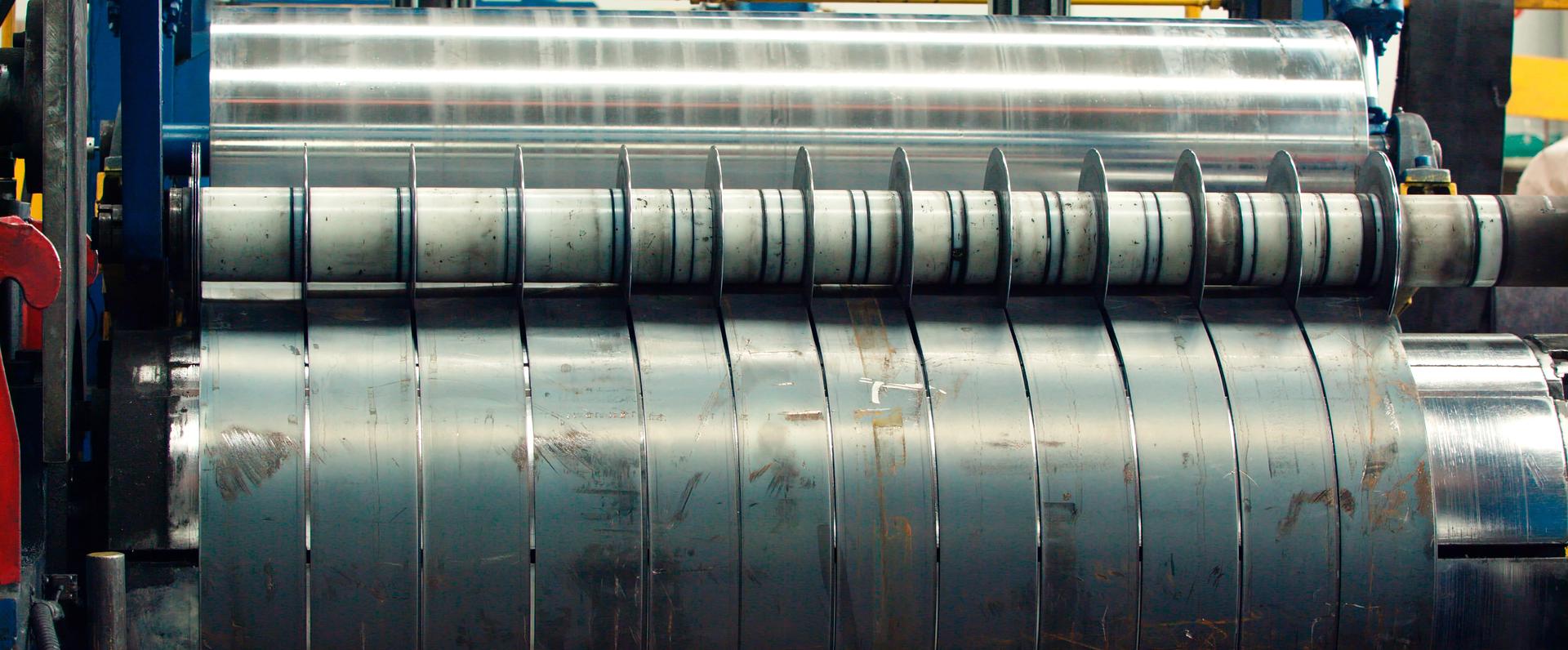
In slitting and leveling systems, the recoiler is responsible for building finished coils with proper tension and structural stability. Poor recoiling results in telescoping, loose wraps, and unsafe coil handling. In most slitting and coil processing lines, recoiler torque control and coil build stability are major factors in strip quality and downstream safety.
For manufacturers seeking reliable performance, investing in a used recoiler can provide substantial cost savings while maintaining production efficiency.
This guide explains how recoilers function, what to inspect in used equipment, and how to select the right system for your operation.
What Is a Recoiler?
A recoiler is a coil handling machine that rewinds processed strip into finished coils while maintaining controlled torque and strip tension after slitting, leveling, or surface treatment.
Recoilers are most commonly found in:
- Slitting lines
- Tension leveling systems
- Pickle lines
- Coating lines
Unlike uncoilers, recoilers must maintain precise tension control to ensure coil build quality
Types of Industrial Recoilers
Single Mandrel Recoilers
Used in lighter applications and single-strand operations.
Overarm Separator Recoilers
Common in slitting lines where multiple strips are rewound simultaneously.
Heavy Gauge Recoilers
Designed for thicker materials and higher torque loads. These systems typically include higher torque drives, reinforced mandrels, and heavier base construction to handle thicker material and higher coil weights.
Key Evaluation Factors for Used Recoilers
When reviewing used recoilers for sale, assess:
Coil Weight Capacity
Ensure the recoiler can safely handle your maximum coil weight.
Mandrel Expansion and Condition
Proper expansion prevents coil collapse or slippage.
Drive Torque and Horsepower
Recoilers must provide sufficient torque to maintain tight wraps under tension.
Overarm Separator Integrity
In multi-strand slitting lines, separator performance impacts strip quality.
Hydraulic and Electrical Systems
Inspect for leaks, aging controls, or outdated PLC systems.
Why Recoiler Performance Matters
Recoiler quality directly affects:
- Coil build tightness
- Strip edge protection
- Safe downstream handling
- Customer satisfaction
Loose wraps or telescoping can create transport issues and safety hazards.
Common Problems in Aging Recoilers
- Hydraulic leaks
- Mandrel wear
- Brake failure
- Torque inconsistency
- Separator misalignment
· Outdated drive systems
Addressing these issues early prevents costly downtime.
Signs You May Need to Replace Your Recoiler
- Inconsistent coil tightness
- Increased scrap rates
- Excessive vibration
- Difficulty handling heavier coils
- Outdated control systems
A properly selected used recoiler can significantly improve finished coil quality.
Used Recoilers vs New Equipment
In many retrofit scenarios, replacing or upgrading the recoiler alone can significantly improve overall line performance without requiring a full system replacement.
Used recoilers offer:
- Lower capital cost
- Faster implementation
- Retrofit upgrade opportunities
- Proven durability
For many operations, a used recoiler provides reliable performance at a fraction of new equipment cost.
Frequently Asked Questions About Used Recoilers
What does a recoiler do in a slitting or coil processing line?
It rewinds processed strip into tight finished coils.
How long do recoilers last?
With maintenance and upgrades, industrial recoilers can operate for decades.
Can used recoilers be modernized?
Yes. Drives, hydraulics, and controls can often be upgraded.
If you are searching for a used recoiler for sale, selecting the proper torque capacity and tension control system is critical for coil processing success.
A well-matched recoiler improves coil quality, operator safety, and production efficiency.
Get A Quote from VX Machinery.