
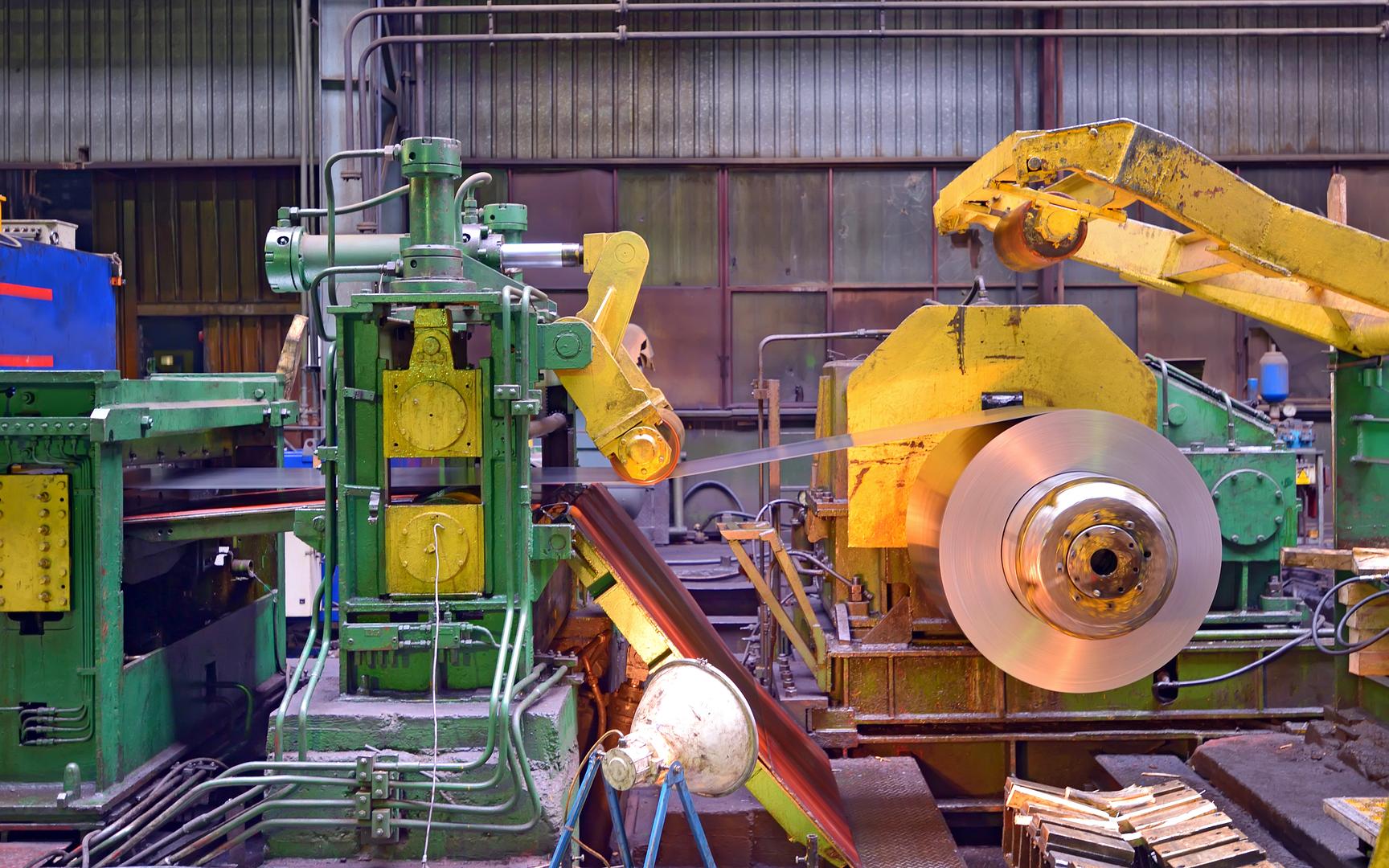
In any coil processing operation, production begins and ends with coil handling equipment. Before a slitting line, CTL line, or roll forming system can perform accurately, the material must be properly unwound, controlled, processed, and rewound.
That responsibility falls on two foundational machines: the uncoiler and the recoiler.
In most coil-fed systems, stable coil handling and tension control are often the primary drivers of strip stability, downstream accuracy, and operator safety.
Understanding how uncoilers and recoilers work and how they interact with the rest of a coil processing line is critical for manufacturers seeking stable throughput, consistent strip quality, and long-term equipment reliability.
This guide explains how these systems function, why tension control matters, and how proper configuration improves slitting and forming performance.
The Role of Coil Handling in Modern Manufacturing
Coil-fed production systems dominate industries such as:
- HVAC manufacturing
- Construction materials
- Automotive components
- Appliance production
- Industrial fabrication
These operations rely on continuous coil processing for efficiency and material yield. However, even the most advanced slitting or CTL equipment cannot compensate for unstable feed or poor coil build.
Uncoilers and recoilers form the mechanical backbone of:
- Slitting lines
- CTL lines
- Tension leveling systems
- Roll forming lines
- Coating and pickling lines
Without proper coil handling, downstream precision suffers.
What Is an Uncoiler and How Does It Work?
An uncoiler is a machine designed to support and unwind a master coil of metal at the beginning of a processing line.
Its primary functions include:
- Supporting coil weight
- Expanding to grip the inner diameter
- Controlling rotational speed
· Working with downstream equipment and braking systems to help regulate strip tension
- Feeding material into entry equipment
Core Uncoiler Components
Most industrial uncoilers include:
- Expanding mandrel
- Drive motor
- Braking system
- Base frame
- Bearing assemblies
- Hydraulic expansion mechanism
The mandrel expands inside the coil to secure it. The drive and braking systems regulate feed speed and prevent overrun.
What Is a Recoiler and How Does It Work?
A recoiler performs the opposite function. After material is processed — slit, leveled, coated, or treated — the recoiler rewinds strip into finished coils.
In slitting lines, recoilers may rewind multiple strands simultaneously.
Core Recoiler Components
Industrial recoilers typically include:
- Expanding mandrel
- Overarm separator (in multi-strand systems)
- Drive motor
- Torque control system
- Hydraulic expansion
- Coil support arm
Recoilers must maintain consistent torque and strip tension to prevent coil defects.
Modern recoilers commonly use torque control through DC or AC drive systems, dancer feedback, or load cell integration depending on line design.
The Importance of Tension Control
Tension control is the mechanical link between uncoilers and recoilers.
Improper tension can cause:
- Coil telescoping
- Loose wraps
- Edge wave
- Strip wandering
- Camber
- Tool wear
In many lines, tension is balanced through coordinated control between entry braking, tension stands, and recoiler torque rather than relying on a single machine.
In slitting lines, inconsistent tension impacts knife engagement and strip separation.
In CTL lines, it affects leveling accuracy and final sheet flatness.
In roll forming, it impacts profile consistency.
Balanced torque between uncoiler braking and recoiler drive systems ensures smooth material flow.
How Uncoilers and Recoilers Interact With Slitting Lines
In slitting systems:
- The uncoiler must feed material smoothly without sudden acceleration.
- The slitter head divides material into narrower strips.
- The tension stand controls strip stability.
- The recoiler builds tight, stable finished coils.
If the uncoiler overruns or brakes inconsistently, the slitter knives experience irregular loading.
If the recoiler torque fluctuates, strip quality degrades.
Proper synchronization improves:
- Knife life
- Coil build quality
- Throughput
- Operator safety
How They Function in CTL Lines
In cut-to-length systems:
- The uncoiler feeds material into the leveler.
- Tension between entry and leveler impacts flatness.
· After shearing, most CTL lines stack sheets, though recoiling may occur in specialty or coil-to-coil processing configurations.
Unstable uncoiler feed can lead to:
- Poor leveling results
- Sheet length inconsistencies
- Increased scrap
Common Failure Points in Coil Handling Equipment
Even durable industrial equipment requires inspection.
Uncoiler Wear Areas
- Mandrel scoring
- Brake wear
- Hydraulic leaks
- Bearing noise
- Frame misalignment
Recoiler Wear Areas
- Mandrel wear
- Separator damage
- Drive motor fatigue
- Torque inconsistencies
- Overarm instability
· Slip clutch or torque regulation components (if equipped)
Early detection prevents larger system failures.
Signs Your Coil Handling Equipment May Need Replacement
- Frequent strip tracking issues
- Coil slippage
- Excessive vibration
- Inconsistent coil tightness
- Difficulty handling heavier coil weights
- Outdated control systems
Upgrading uncoilers or recoilers often improves overall line performance without replacing the entire system.
Used vs New Coil Handling Equipment
New equipment offers advanced automation but may involve long lead times and high capital cost.
In many retrofit scenarios, upgrading coil handling equipment delivers measurable performance gains without the capital cost of replacing an entire processing line.
Used uncoilers and recoilers can offer:
- Lower upfront investment
- Faster availability
- Proven industrial durability
- Retrofit upgrade potential
For many operations, upgrading coil handling equipment delivers substantial ROI without a full line replacement.
Frequently Asked Questions
What does an uncoiler do in a coil processing line?
An uncoiler supports and unwinds master coil to feed downstream processing equipment.
What does a recoiler do in slitting and CTL systems?
A recoiler rewinds processed strip into tight finished coils after slitting or leveling.
Why is tension control important?
Proper tension prevents strip defects, improves coil build quality, and protects tooling.
How long do uncoilers and recoilers last?
With proper maintenance and occasional upgrades, they can operate effectively for decades.
Improving Line Performance With Proper Coil Handling
In coil processing systems, uncoilers and recoilers are not secondary components — they are performance drivers.
Properly matched and maintained equipment improves:
- Throughput
- Strip quality
- Operator safety
- Equipment lifespan
- Production consistency
If you are evaluating coil processing upgrades, reviewing the condition and configuration of your uncoilers and recoilers is often the first step toward improving overall line efficiency.
Explore available coil handling equipment or speak with our team to evaluate the best solution for your operation.
Get a Quote from VX Machinery.