
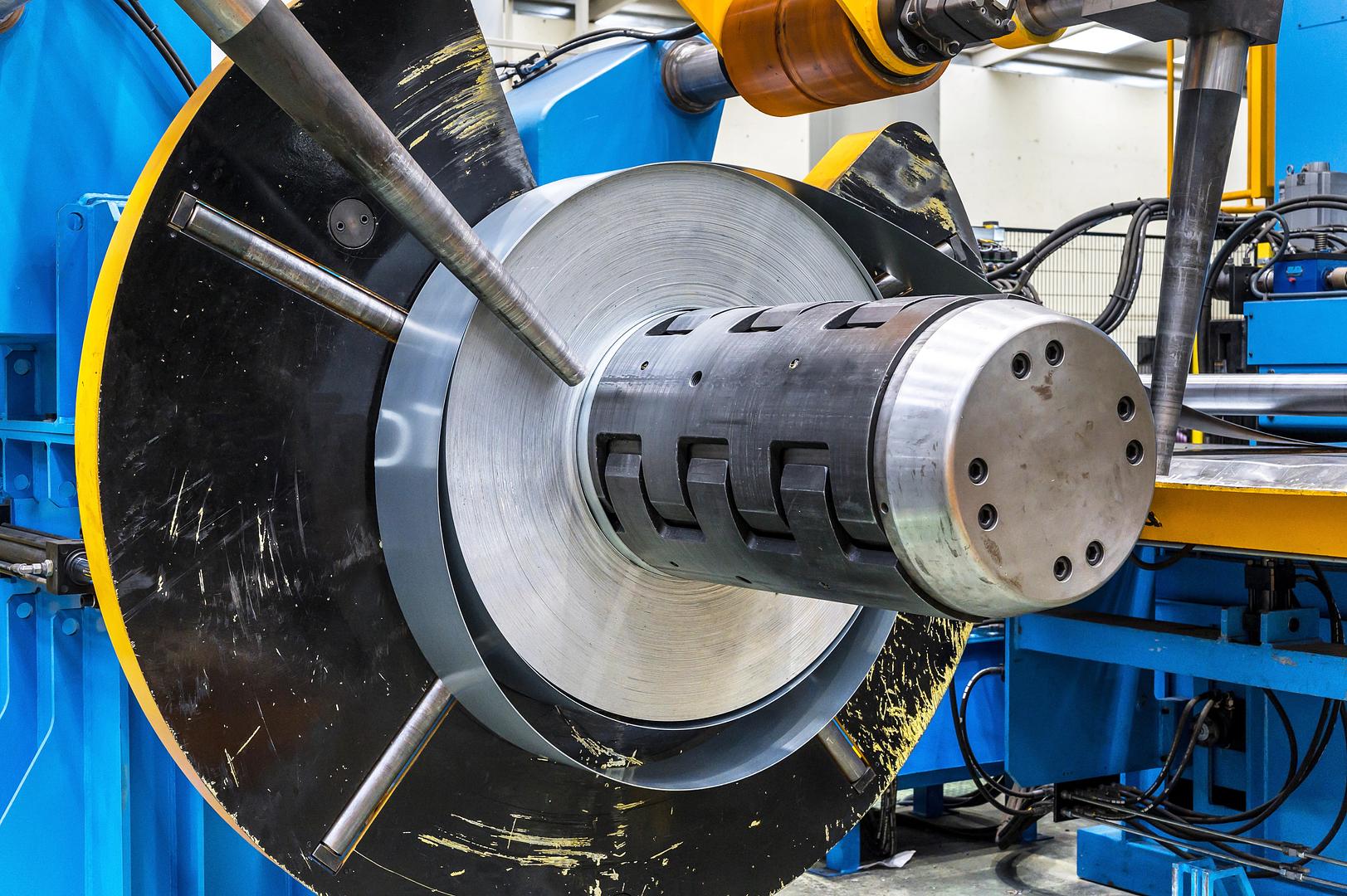
In any coil processing system, the uncoiler is where production begins. Whether feeding a slitting line, CTL line, roll forming system, or leveling line, a properly functioning uncoiler determines feed stability, material alignment, and overall line performance.
For manufacturers across the United States and North America, investing in a used uncoiler can provide significant cost savings while maintaining production reliability. However, selecting the right uncoiler requires understanding load capacity, tension control, structural integrity, and integration with downstream equipment.
This guide explains how uncoilers work, what to inspect when buying used equipment, and how to determine the right system for your operation.
What Is an Uncoiler?
An uncoiler is a coil handling machine designed to support and unwind a master coil of metal. It feeds material into downstream processing equipment at a controlled rate.
Uncoilers are typically found at the beginning of:
- Slitting lines
- Cut-to-length lines
- Roll forming equipment
- Tension leveling systems
- Coil coating lines
Without stable and consistent material feed, even the most advanced slitting or roll forming systems cannot perform efficiently.
Types of Industrial Uncoilers
Not all uncoilers are built the same. The correct configuration depends on coil weight, width, and material thickness.
Single Mandrel Uncoilers
These systems use one expanding mandrel to grip the inner diameter of the coil. They are common in light to medium gauge applications.
Advantages:
- Simple design
- Lower cost
- Reliable performance
Double Mandrel Uncoilers
These allow faster coil changeover by staging the next coil while production continues.
Benefits:
- Reduced downtime
- Increased throughput
Hydraulic Expanding Mandrel Uncoilers
Hydraulic systems provide stronger grip and better tension control, especially for heavier coils.
Ideal for:
- Heavy gauge materials
- High-capacity slitting lines
- Demanding production environments
Heavy Duty Uncoilers
Designed for very large coil weights and thick materials. These systems require robust frames, high torque drives, and reliable braking systems.
Key Specifications to Evaluate When Buying a Used Uncoiler
When reviewing used uncoilers for sale, evaluate:
Coil Weight Capacity
Ensure the uncoiler supports your maximum coil weight with a safety margin.
Maximum Coil Width
Mismatch in width capacity can create alignment issues and safety risks.
Mandrel Expansion Range
The mandrel must properly grip your coil inner diameter.
Drive System and Braking
Smooth, controlled feed depends on:
- Motor horsepower
- Brake responsiveness
- Speed control accuracy
Structural Integrity
Inspect:
- Frame condition
- Welds
- Base alignment
- Bearing wear
Even minor misalignment can affect strip tracking downstream.
How Uncoilers Impact Slitting and CTL Performance
Many manufacturers underestimate how much the uncoiler affects downstream quality.
An unstable uncoiler can cause:
- Strip wandering
- Tension inconsistency
- Camber
- Coil slippage
- Increased scrap
In slitting lines, unstable feed affects knife engagement and strip separation.
In CTL lines, it can impact leveling accuracy and sheet flatness.
Proper uncoiler setup improves:
- Strip quality
- Line speed stability
- Tool life
- Operator safety
Common Wear Areas in Used Uncoilers
Before purchasing, inspect:
- Mandrel wear or scoring
- Hydraulic leaks
- Bearing noise
- Brake wear
- Shaft straightness
- Control system age
A well-maintained industrial uncoiler can operate effectively for decades, but deferred maintenance can create hidden costs.
Signs You May Need to Replace Your Uncoiler
- Coil slippage during feed
- Frequent downtime
- Inconsistent strip alignment
- Difficulty handling heavier coil weights
- Outdated controls
Upgrading to a properly matched used uncoiler can stabilize production and reduce scrap.
Used Uncoilers vs New Equipment
Used uncoilers often offer:
- Lower capital investment
- Faster availability
- Proven industrial durability
- Upgrade potential for drives and controls
For growing operations, a used uncoiler can deliver strong ROI without extended lead times.
Frequently Asked Questions About Used Uncoilers
What does a coil uncoiler do?
It supports and unwinds master coil into processing equipment.
How long do industrial uncoilers last?
With maintenance and occasional upgrades, they can operate for decades.
Is buying a used uncoiler reliable?
Yes, when properly inspected and matched to production needs.
If you are searching for a used uncoiler for sale, selecting the proper capacity, drive system, and tension control configuration is essential for reliable coil processing.
Choosing the right uncoiler improves feed stability, reduces downtime, and supports overall line efficiency.
Get A Quote from VX Machinery.