
Flatness is critical in coil processing.
Steel, aluminum, stainless steel and other metals can develop shape problems as a result of coiling, rolling and internal material stresses. Before that material can be reliably cut, stamped, formed or fabricated, those irregularities often need to be corrected.
That is where levelers and straighteners come into the process.
Although the terms are sometimes used interchangeably, levelers and straighteners perform different levels of material correction. Understanding those differences is important when evaluating a used leveler, straightener or complete coil processing line.
For manufacturers considering used coil processing equipment, the correct leveling system can improve material flatness, reduce scrap, support downstream accuracy and increase overall production efficiency.
This guide explains how levelers and straighteners work, the different types of leveling equipment available and the specifications buyers should evaluate when selecting a used machine.
What Is a Coil Leveler?
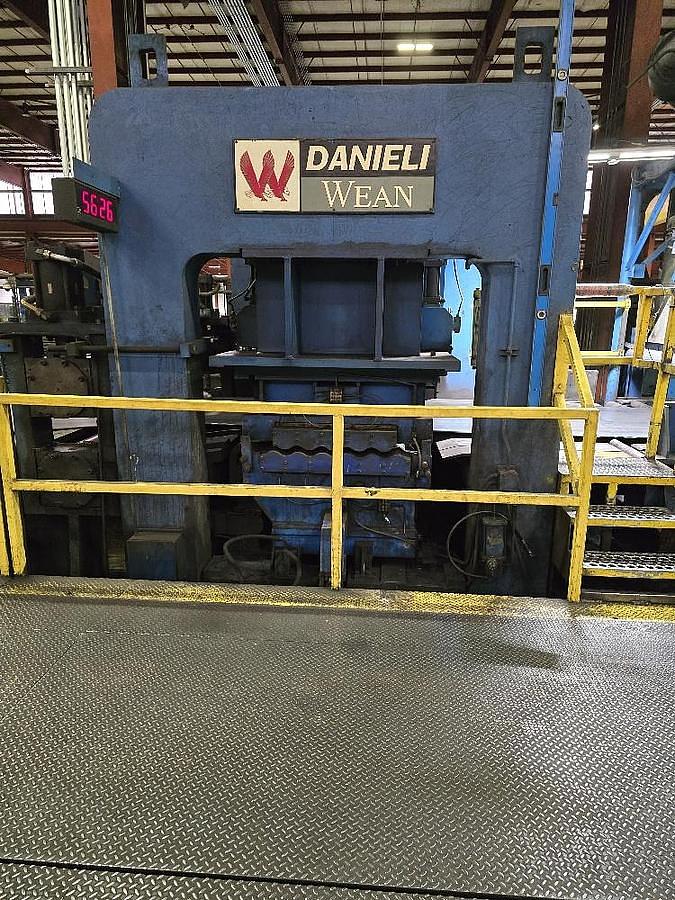
A coil leveler is a metal processing machine designed to improve the flatness and shape of material by passing it through a series of work rolls.
As coiled material enters the leveler, it is repeatedly bent in alternating directions. These controlled bending cycles help reduce residual stresses and correct shape irregularities in the strip or sheet.
Depending on its design, a leveler may be capable of correcting:
- Coil set
- Crossbow
- Edge wave
- Center buckle
- Other flatness and shape irregularities
Levelers are commonly integrated into cut-to-length lines and other coil processing systems where consistent material flatness is required before cutting, stacking or further fabrication.
They can also be installed as standalone machines depending on the application.
What Is a Coil Straightener?
A straightener also uses a series of rolls to bend material and reduce the curvature created when metal has been stored in coil form.
Straighteners are commonly used to remove coil set and reduce crossbow before the material enters another manufacturing process.
They are frequently found in:
- Press feed lines
- Stamping operations
- Roll forming lines
- Coil-fed fabrication systems
- Light and medium gauge processing applications
The primary objective is to produce sufficiently straight material for reliable downstream feeding and processing.
Leveler vs. Straightener: What Is the Difference?
One of the most common questions in coil processing is whether a leveler and a straightener are the same machine.
They are related, but there are important differences.
A straightener primarily works to remove curvature such as coil set by repeatedly bending material as it passes through its rolls.
A precision or corrective leveler generally provides a greater degree of shape correction. In addition to reducing coil set and crossbow, properly configured leveling equipment can address conditions such as edge wave and center buckle by controlling the bending and elongation of different areas across the material.
The exact capabilities depend on the machine design, roll configuration, adjustment system and material being processed.
For this reason, buyers should evaluate the actual specifications and construction of a machine rather than relying only on whether it is described as a “leveler” or “straightener.”
Why Metal Coils Need Leveling
Metal stored in coil form is subjected to stresses that can remain in the material after it is unwound. Several common shape conditions can result.
Coil Set
Coil set occurs when material retains some of the curvature of the original coil after being unwound.
Instead of lying flat, the strip continues to curve in the direction in which it was coiled.
Crossbow
Crossbow is curvature across the width of the strip.
When viewed from the end, the material may appear curved rather than flat across its width.
Edge Wave
Edge wave occurs when the edges of the strip are effectively longer than the center portion, causing the edges to appear wavy.
Center Buckle
Center buckle is generally the opposite condition. The center portion of the strip is effectively longer than the edges, creating waves or buckling through the center.
These conditions can create problems in downstream operations including shearing, stamping, roll forming, welding and fabrication. A properly selected leveler helps correct these irregularities before the material reaches the next production stage.
How Does a Leveler Work?
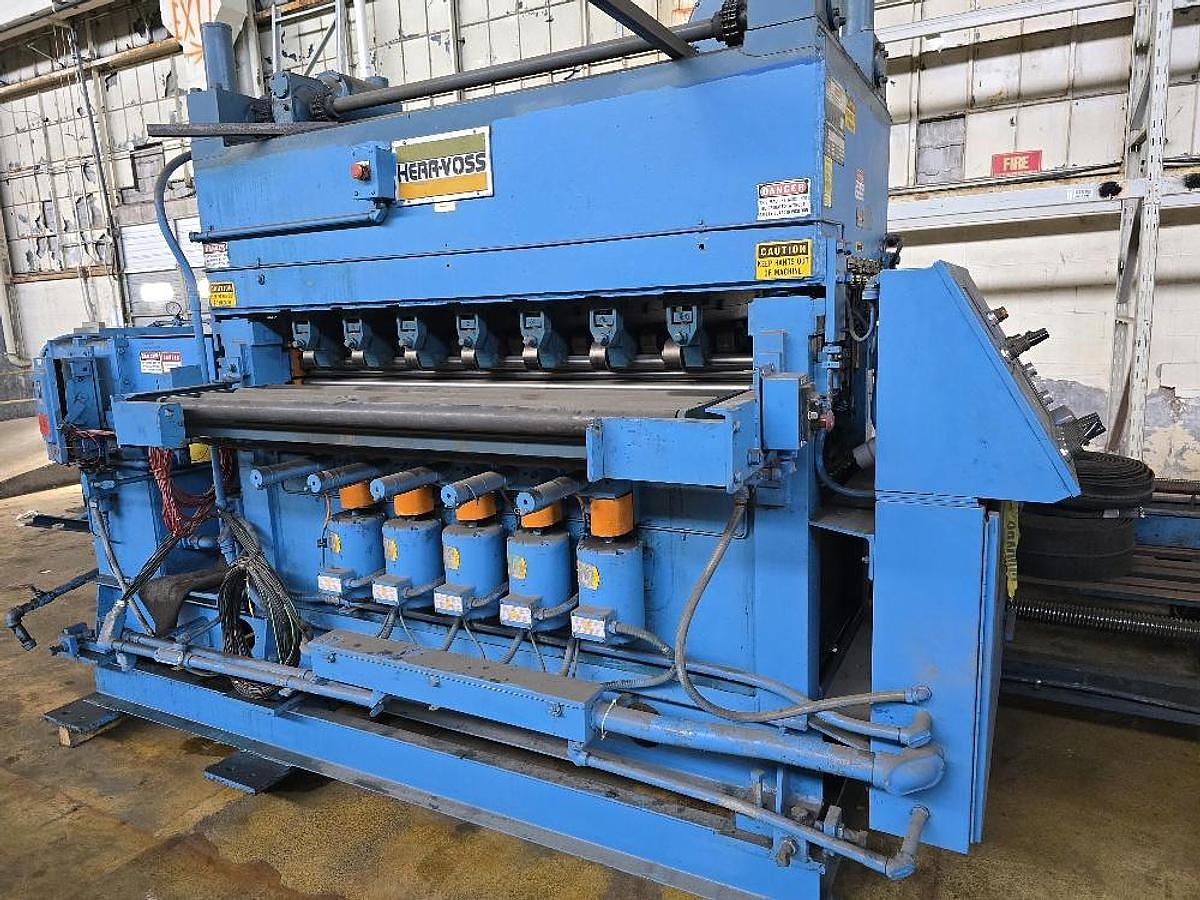
A leveler typically contains multiple upper and lower work rolls arranged in an offset pattern.
As material travels through the machine, it is alternately bent upward and downward.
The first rolls generally produce the greatest bending action. As the material progresses through the machine, the amount of bending is gradually reduced until the strip exits in a flatter condition.
This process helps redistribute residual stresses within the material.
Leveler performance depends on several factors, including:
- Work roll diameter
- Roll spacing
- Number of work rolls
- Backup roll configuration
- Entry and exit settings
- Material thickness
- Material width
- Yield strength
- Line speed
- Machine horsepower and drive configuration
A leveler must therefore be correctly matched to the material range being processed.
Common Types of Coil Levelers
There is no single leveler configuration suitable for every application. Coil processors use several different designs depending on material thickness, width, strength, surface requirements and desired flatness.
Precision Levelers
Precision levelers are designed for applications requiring a high degree of flatness and shape correction. They typically use relatively small-diameter work rolls supported by backup rolls to minimize work roll deflection under load. Precision levelers are commonly used in cut-to-length and blanking operations where finished sheet flatness is especially important.
Corrective Levelers
Corrective levelers are designed to correct shape defects across the width of the material. Adjustable backup rolls or flights can allow operators to influence the work rolls under load and compensate for conditions such as edge wave and center buckle. This provides more control over strip shape than simple straightening alone.
Cassette Levelers
A cassette leveler uses removable or interchangeable roll cassettes. Different cassettes may use different work roll diameters or configurations, allowing one machine to process a broader range of material thicknesses. For example, a cassette with larger-diameter work rolls may be appropriate for heavier material, while a cassette containing smaller-diameter work rolls may provide the bending action required for thinner material. Cassette systems can be especially useful for processors handling a wide product mix.
4-High, 5-High and 6-High Levelers
Levelers may also be described according to their roll arrangement. Multi-high configurations use additional supporting rolls to reinforce the work rolls and control deflection. 5-high and 6-high designs may also be used where surface-sensitive materials require additional protection or where more sophisticated roll support is necessary. The correct configuration depends on the material and required finished product.
Plate Levelers
Heavy-duty plate levelers are designed for thicker material and plate applications. These machines generally use larger work rolls, substantial frames and high horsepower to generate the forces required to flatten heavy-gauge material.
Where Are Levelers Used in Coil Processing?
Levelers are used throughout the metal processing industry, but one of their most common applications is within a cut-to-length line.
A typical cut-to-length process may include:
- Coil loading
- Uncoiling
- Feeding
- Leveling
- Measuring
- Shearing
- Stacking
The uncoiler introduces the master coil into the line. The material then passes through the leveler before being measured and cut into sheets or blanks.
Because leveling occurs before the shear, leveler performance can directly affect the quality of the finished sheets.
Leveling equipment may also be incorporated into multi-blanking lines, press feed systems and specialized coil processing lines.
Levelers in Cut-to-Length Lines
The leveler is one of the most important components of a cut-to-length line.
A CTL line can accurately measure and shear material, but dimensional accuracy alone does not guarantee a usable finished sheet. If the incoming strip contains significant coil set, wave or buckle, the finished blank may still fail downstream flatness requirements.
The leveler prepares the material before it reaches the shear.
When evaluating a used cut-to-length line, buyers should therefore consider the leveler as a major part of the system rather than simply an auxiliary component.
The leveler’s capacity must match the line’s intended:
- Width range
- Gauge range
- Material type
- Yield strength
- Production speed
- Finished flatness requirements
Important Specifications When Buying a Used Leveler
When evaluating a used leveler for sale, nameplate width alone is not enough to determine whether the machine is appropriate for an application.
Several specifications should be reviewed.
Material Width
Determine both the maximum material width and the actual working width required for production. A machine must be capable of supporting the strip across the necessary width while maintaining the required correction.
Material Thickness Range
Levelers are designed around specific gauge or thickness ranges. A machine designed for light-gauge material may not generate sufficient force for heavy plate, while a heavy-gauge leveler may use rolls that are too large to effectively process very thin material.
Work Roll Diameter
Work roll diameter is a critical specification. Smaller-diameter work rolls can create tighter bending radii, making them effective for thinner material. Larger rolls provide the strength required for heavier material. Cassette levelers may offer multiple roll diameters to increase the machine’s usable processing range.
Number of Work Rolls
The number and arrangement of work rolls influence how many bending cycles are applied to the material. Precision levelers commonly use numerous closely spaced rolls to progressively reduce material stresses.
Backup Rolls and Flights
Backup rolls support the work rolls and help prevent unwanted deflection. On corrective levelers, adjustable backups or flights may also provide control over strip shape across the width of the machine.
Horsepower and Drive
The drive system must provide sufficient power for the intended material width, thickness and strength.
Buyers should review:
- Motor horsepower
- Motor speed
- Gear reducer
- Drive arrangement
- Electrical requirements
Material Strength
Thickness alone does not determine leveling requirements. Yield strength and tensile strength can significantly affect the amount of force necessary to process a particular material. Two coils of identical dimensions may require different leveling capacity if their mechanical properties differ.
Line Speed
When a leveler will be installed in an existing coil processing line, its operating speed should be compatible with the rest of the system. The drive, controls and mechanical components must work together at the required production rate.
What Should You Inspect on a Used Leveler?
Used industrial levelers can provide decades of productive service, but machine condition should be carefully evaluated before purchase.
Important inspection areas include:
Work Rolls
Inspect the work rolls for:
- Scoring
- Pitting
- Excessive wear
- Surface damage
- Corrosion
- Evidence of improper grinding
Roll condition is particularly important when processing surface-sensitive material.
Bearings
Worn bearings can affect roll alignment and create vibration or inconsistent performance. Check for unusual noise, excessive movement and signs of lubrication problems.
Backup Roll System
Inspect backup rolls, bearings, flights and adjustment mechanisms. These components are essential for maintaining work roll support and controlling deflection.
Adjustment Mechanisms
Verify that entry, exit and backup adjustments operate properly. Depending on the machine, these systems may be mechanical, hydraulic or electrically controlled.
Gearbox and Drive Components
Inspect:
- Gearboxes
- Couplings
- Shafts
- Motors
- Universal joints
- Drive components
Look for signs of excessive wear, leakage or previous repair.
Frame and Housing
The machine frame should be inspected for cracks, damage, modifications or evidence of severe overload. Because levelers generate significant forces, structural integrity is essential.
Controls and Electrical System
Older used levelers may have mechanically sound frames and roll systems but outdated controls. Depending on the application, upgrading drives, controls or operator interfaces may extend the useful life of the machine.
Used Leveler vs. New Leveler
Purchasing used coil processing equipment can provide significant advantages for manufacturers looking to increase capacity or replace an existing machine.
A quality used leveler may offer:
- Lower capital investment
- Faster availability
- Proven industrial construction
- Opportunities for rebuilding or modernization
- Access to heavy-duty equipment that may be expensive to reproduce new
Many older levelers were built with substantial frames and mechanical components designed for long-term industrial service.
However, the value of a used machine depends on its condition, specifications and suitability for the intended application.
The lowest purchase price is not necessarily the best value.
A machine that does not match the required width, thickness, material strength or flatness requirements can create production problems regardless of its condition.
Choosing the Right Used Leveler
Before purchasing a used leveler, define the production requirements as clearly as possible.
Important information includes:
- Minimum material width
- Maximum material width
- Minimum material thickness
- Maximum material thickness
- Material type
- Yield strength
- Coil weight
- Desired line speed
- Required flatness
- Surface sensitivity
- Existing line configuration
- Available floor space
- Electrical requirements
Providing this information allows an equipment supplier to more accurately determine whether a particular leveler is suitable for the application.
Common Leveler Manufacturers
The used machinery market includes leveling equipment manufactured by many established coil processing equipment builders.
Depending on the application and machine availability, manufacturers may include:
- Herr-Voss
- Braner
- Butech
- Danieli-Wean
- Machine Concepts
- McKay
- Aetna-Standard
- Sutton
- Pro-Eco
- Red Bud Industries
Machine condition, design and specifications should always be evaluated individually rather than selecting equipment based solely on manufacturer.
Frequently Asked Questions About Used Levelers
What does a leveler do in coil processing?
A leveler improves material flatness by repeatedly bending metal through a series of rolls. Depending on the machine design, it can reduce coil set, crossbow, edge wave, center buckle and other shape irregularities.
What is the difference between a leveler and a straightener?
A straightener is commonly used primarily to reduce coil set and curvature. A precision or corrective leveler generally provides greater control over material shape and can address more complex flatness problems.
What is a precision leveler?
A precision leveler uses multiple work rolls, typically with substantial backup support, to produce controlled bending and improve material flatness. These machines are often used in cut-to-length and blanking applications.
What is a cassette leveler?
A cassette leveler uses removable roll cassettes. Different cassettes can contain different work roll diameters or configurations, allowing the machine to process a broader range of material thicknesses.
Can a used leveler be rebuilt?
Many industrial levelers can be rebuilt or modernized depending on their mechanical condition. Work rolls, bearings, drives, hydraulic systems and controls may be repaired, replaced or upgraded.
What information is needed to size a coil leveler?
Important factors include material width, thickness range, material type, yield strength, line speed and required finished flatness. Evaluating thickness without considering material strength can result in an incorrectly sized machine.
Where can I find used levelers for sale?
VX Machinery buys and sells used levelers, straighteners and complete coil processing systems for metalworking operations. Available equipment varies as machines are sold and new inventory becomes available.
Used Levelers and Coil Processing Equipment From VX Machinery
Selecting the right leveler requires more than matching a material width to a machine.
Work roll diameter, thickness range, material strength, backup configuration, horsepower, speed and overall machine condition all influence whether a leveler will perform correctly in a specific application.
VX Machinery specializes in used coil processing and metalworking equipment, including levelers, straighteners, cut-to-length lines, slitting lines, uncoilers, recoilers, rolling mills and complete processing systems.
Our inventory includes equipment for a wide range of light-gauge, heavy-gauge and precision coil processing applications.
Browse our current used levelers for sale or contact VX Machinery to discuss your material specifications and production requirements. Our team can help identify equipment suited to your operation.